Best design tools for ecommerce

The eCommerce it has evolved far beyond “having an online store”. Today, the success of a digital business depends directly on the User experience, browsing speed and visual design quality, but also how the information is structured to guide the user towards the purchase.

Therefore, choose the right tools for Design an eCommerce it is not a technical detail, but a strategic decision that impacts conversion, customer retention and business growth.

In this blog we will see the Best design tools for ecommerce and how they help create more attractive, functional and conversion-focused stores.

What does a good ecommerce design need?

Before talking about tools, it is important understand what a eCommerce Well designed:

  • Facilitate User navigation with a clear and logical structure
  • Show products in an attractive way, with a well-defined visual hierarchy
  • REDUCE Friction in the purchase process eliminating unnecessary steps
  • Optimize Conversion through clear and visible calls to action
  • Adapt perfectly to mobile devices, where most traffic occurs

🔎 A good design is not just aesthetic, it is Sales, trust and user experience. Even small design changes can significantly increase the conversion rate.

Image of a person holding a tablet showing different icons related to ecommerce

Key tools for ecommerce design

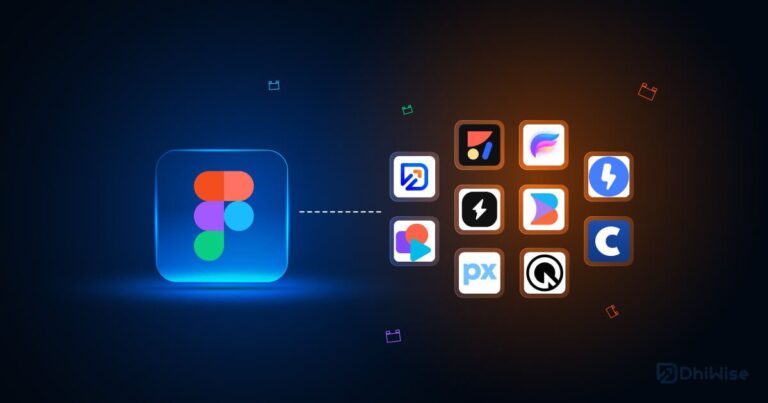
Figma: The basis of modern ecommerce design

Figma it is currently the most used tool to design Online stores and digital products.

Its success is due to the fact that it allows design interfaces complete, prototype interactions and collaborate in real time, something essential in ecommerce projects where they intervene Designers, developers, marketers and clients.

🔎 Why is it ideal for ecommerce?

  • Allow design From wireframes to full store final interfaces
  • Facilitates the Creation of key pages such as home, product sheets and checkout
  • Use Reusable components that maintain coherence throughout ecommerce
  • Allow Simulate the shopping experience Before programming anything

Also, in eCommerce it is very common to make constant changes to optimize conversions, and Figma allows you to iterate quickly without redoing the entire design.

 Shopify: Design + Implementation

Shopify it is not just a design tool, but a complete platform to build Functional eCommerce.

Allows you to create Online stores no need for advanced programming and templates optimized for sales right out of the box.

👍 Advantages in eCommerce design

  • Templates designed specifically for conversion and sale
  • Optimized checkout that reduces cart abandonment
  • Responsive automatic design adapted to mobile
  • Integration with marketing, analytics and automation tools

In many cases, the ideal flow is to design the experience in Figma and then move it to Shopify for its actual implementation.

Prototyping tools

On eCommerce, it is not enough to design beautiful screens: it is essential to simulate how the user really buys.

The tools of prototyped they allow to validate the complete experience before the development.

With them you can:

  • Simulate the complete tour of purchase from product to payment
  • Detect points friction in the checkout process
  • Try out different Versions Navigation or store structure
  • Validate hypotheses design with users or clients

👍 This reduces costly mistakes and improves decision making before investing in development.

Product display tools

A eCommerce it depends largely on how the products are presented, since the purchase decision is highly visual.

Design tools allow IMPROVE:

  • Product photography optimized for conversion
  • Layout of more attractive image galleries
  • Visual hierarchy on product sheets
  • Elements such as prices, discounts and well-structured CTAs

🔎 In eCommerce, the way in which the product is shown can be the difference between selling or losing the user.

Design Systems for eCommerce Scalable

A eCommerce it is not a single page, but a complete ecosystem of interfaces connected to each other.

Therefore, the design systems they are essential to maintaining visual coherence as the store grows.

A well-built design system ensures:

  • Consistency in Purchase buttons and CTAS
  • Uniformity in Typefaces and colors branded
  • Reuse of components as product cards
  • Scalability Without losing visual identity

🔎 Without a solid system, eCommerce they tend to become inconsistent over time, which directly affects user confidence.

Artificial Intelligence Applied to Ecommerce

The artificial intelligence it is beginning to transform the way ecommerce is designed.

Today it can help:

  • Generate Initial Landing Pages or Store Structures
  • Create Conversion-optimized product texts
  • Analyze User behavior to improve design
  • Personalize the experience according to the type of customer

🔎 This does not replace the design, but it does accelerate processes and allows you to repeat much faster on ideas.

How to choose the right tools

Not all Online stores they need the same configuration. To choose well you have to take into account:

1. Ecommerce size

A store with few products is not the same as a marketplace with thousands of references.

2. Business objective

Some ecommerce prioritize branding, others direct conversion.

3. Work team

Designers, developers and marketing should work aligned from the start.

4. Project Scalability

The tool must allow to grow without redoing the entire design system.

Banki-Commerce-1

Common Errors in eCommerce Design

  • Design Thinking only of visual aesthetics without optimizing conversion
  • Do not adapt correctly the Mobile experience
  • Overburden the interface with too many elements
  • Do not test the actual purchase flow of the user
  • Do not use systems of design from the beginning

A eCommerce it does not fail due to lack of beautiful design, but due to a bad user experience that generates abandonment.

At Cofana Labs, we understand that the design of an ecommerce is not based solely on aesthetics, but also on the ability to transform the user experience into real business results.

For this reason, we design and develop digital solutions that combine strategy, UX/UI and automation, adapted to the specific needs of each project. It’s not just about using tools like Figma or Shopify, but about building a consistent, smooth, conversion-optimized shopping experience.

Cofana Labs accompanies you in this process, helping you to turn your ecommerce into a scalable, efficient and ready to grow platform.

Contact us at 📩 info@cofanalabs.com

LITERATURE

Book your first free consultation now!